Desktop Computer vs Laptop: Which One Should You Choose?
In today’s technology-driven world, computers have become an essential part of our daily lives. From attending online classes and working remotely to gaming and content creation, a reliable computer is a necessity. When buying a new device, many people face one common question: Should I choose a desktop computer or a laptop? Both devices are powerful and capable of handling everyday tasks, but they are designed to meet different needs. Understanding their strengths and limitations will help you make the right decision.
What Is a Desktop Computer?
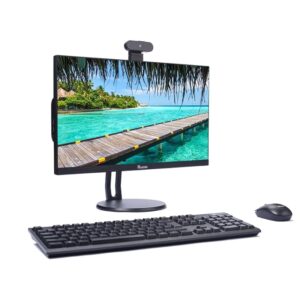
A desktop computer is a personal computer designed to stay in one location. It usually consists of a monitor, CPU (central processing unit), keyboard, and mouse. Since its components are separate, users can easily upgrade or replace them whenever needed. Desktop computers are commonly used in offices, schools, and homes where portability is not a priority.
What Is a Laptop?
A laptop is a compact and portable computer that combines all essential components into one device. It includes a built-in display, keyboard, touchpad, speakers, webcam, and rechargeable battery. Laptops are designed for users who need the flexibility to work, study, or entertain themselves from different locations.
Performance Comparison
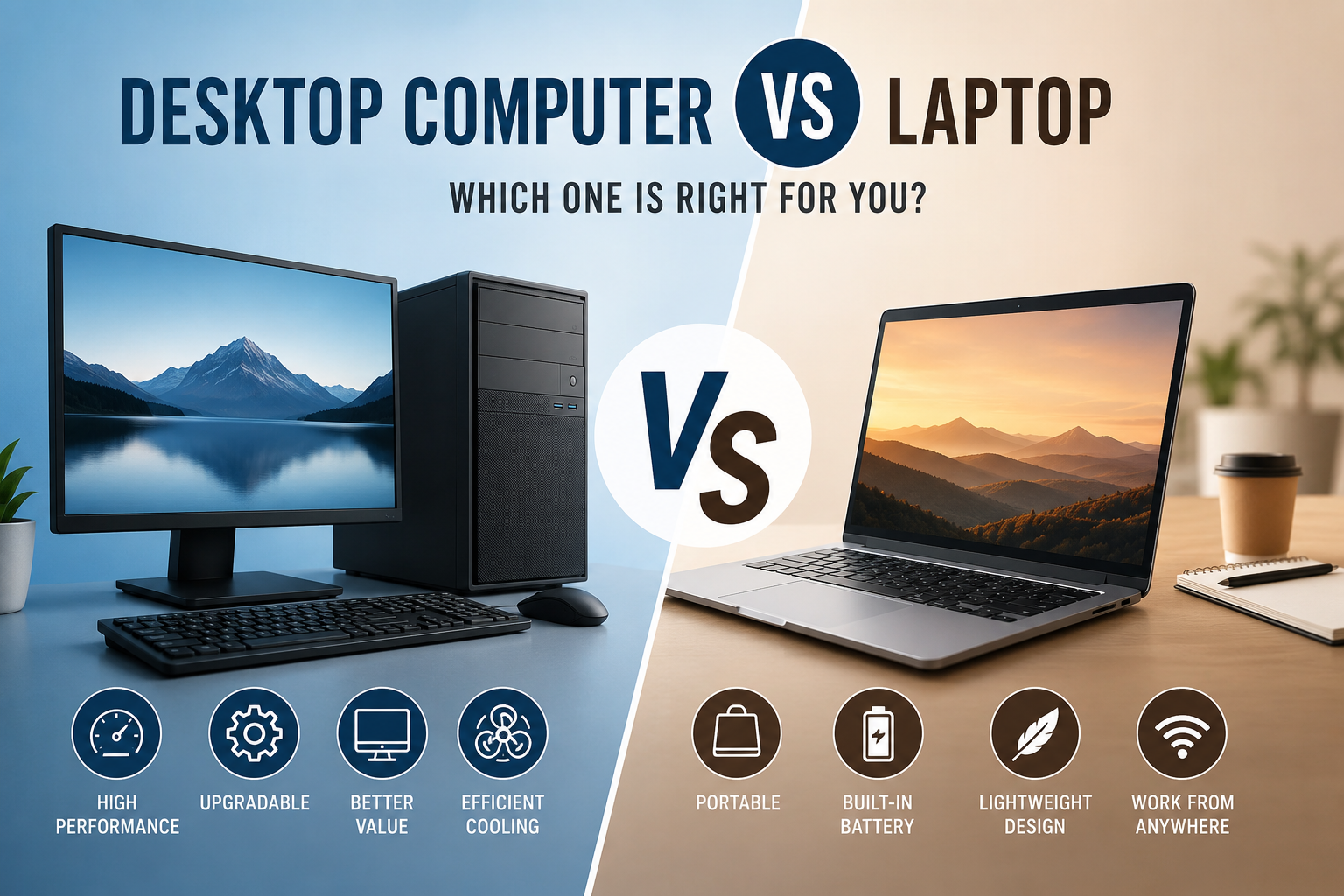
One of the biggest differences between desktops and laptops is performance. Desktop computers generally offer faster processors, better graphics cards, and more efficient cooling systems. These features allow desktops to handle demanding tasks such as video editing, 3D modeling, programming, and high-end gaming with ease.
Although modern laptops have become increasingly powerful, they still have limitations due to their compact size. Their smaller cooling systems may reduce performance during heavy workloads. However, for everyday activities like web browsing, online meetings, document editing, and streaming videos, most laptops perform exceptionally well.
Portability and Convenience
Portability is where laptops truly shine. Their lightweight design allows users to carry them to classrooms, offices, libraries, coffee shops, or while traveling. Since laptops include a built-in battery, they can operate even when there is no direct power supply, making them ideal for people with busy lifestyles.
Desktop computers, on the other hand, are not meant to be moved frequently. They require a dedicated workspace and constant power connection. While this limits mobility, it also creates a stable and comfortable working environment.
Cost and Value for Money
Desktop computers often provide better performance for the price. A desktop with similar specifications to a laptop usually costs less because manufacturers do not need to fit all components into a compact body. Additionally, upgrading a desktop is much easier and more affordable. Users can replace individual parts like RAM, storage drives, or graphics cards instead of purchasing a completely new system.
Laptops are generally more expensive because of their portable design and integrated hardware. While they offer convenience, repairs and upgrades can be costly, and some components cannot be replaced at all.
Maintenance and Upgradability
Another major advantage of desktop computers is their ease of maintenance. Cleaning internal components, replacing damaged parts, or upgrading hardware is relatively simple. This extends the computer’s lifespan and helps users keep up with changing technology.
Laptops require more careful handling because of their compact construction. Replacing a broken screen, battery, or keyboard can be expensive, and many modern laptops have limited upgrade options. As a result, users may need to replace the entire device after several years.
Energy Efficiency
Laptops consume less electricity than desktop computers because they are designed to maximize battery life. This makes them more energy-efficient and environmentally friendly. Lower power consumption also helps reduce electricity costs over time.
Desktop computers usually require more energy, especially those equipped with high-performance processors and dedicated graphics cards. However, they provide superior computing power for users who need maximum performance.
Which One Is Best for You?
The answer depends on your lifestyle and computing needs.
Choose a desktop computer if you:
- Need high performance for gaming, video editing, or professional software.
- Want easy hardware upgrades.
- Prefer a larger monitor and a comfortable workstation.
- Want better value for your money.
Choose a laptop if you:
- Travel frequently or work from different locations.
- Need a lightweight and portable device.
- Attend online classes or business meetings on the go.
- Value convenience over maximum performance.
Conclusion
The debate between a desktop computer and a laptop does not have a one-size-fits-all answer. Both devices have their own strengths and are designed for different purposes. Desktop computers offer exceptional performance, easy upgrades, and long-term value, while laptops provide unmatched portability, convenience, and energy efficiency. Before making a purchase, consider your budget, daily activities, and future requirements. By choosing the device that aligns with your lifestyle, you can enjoy a better computing experience and make a worthwhile investment.